Stucco that needs to breathe.
The wrong coating on a stucco wall does not just fail. It traps moisture and takes stucco with it when it goes.
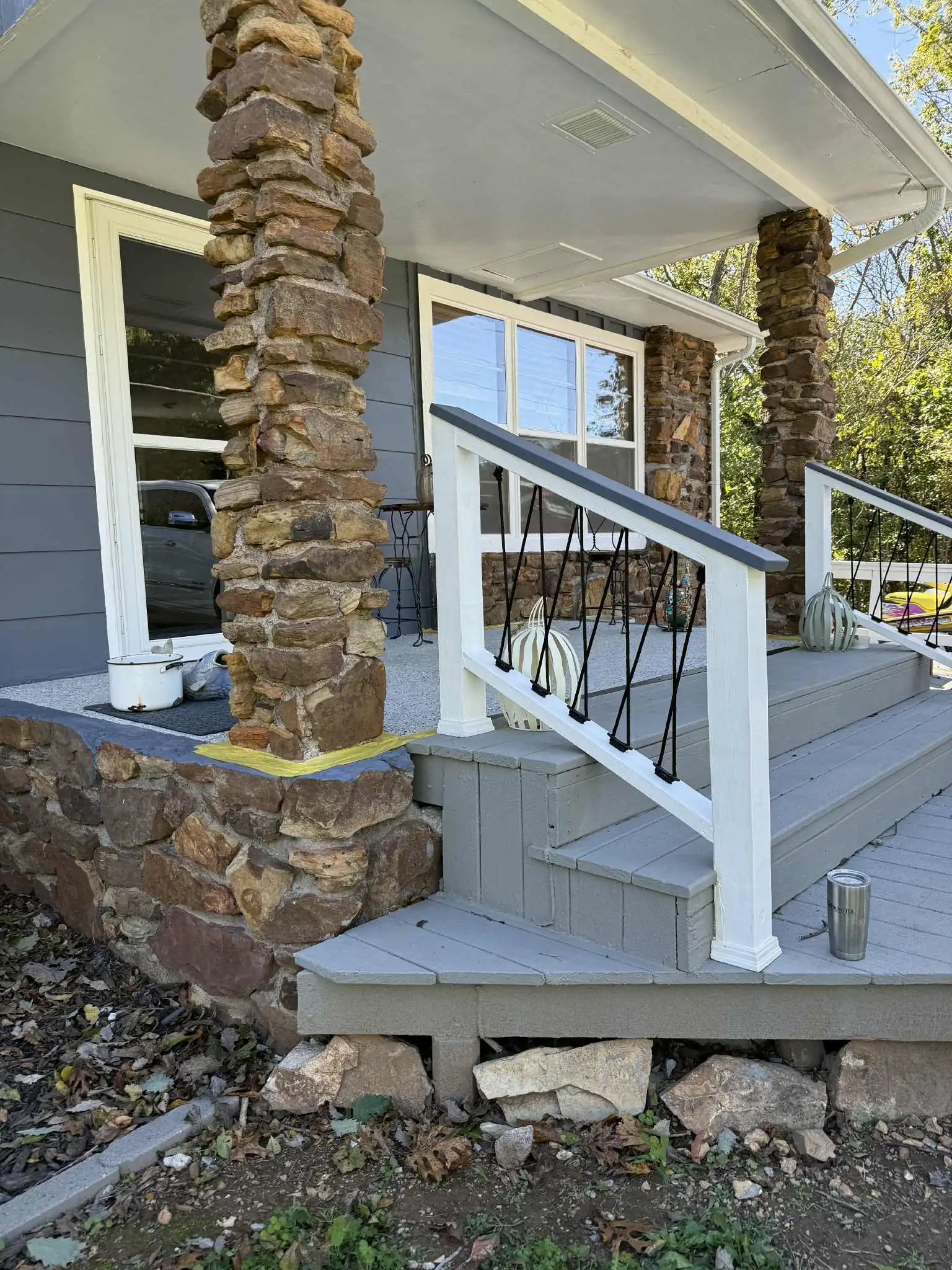
Painter Hotline paints stucco and masonry exteriors in Golden. Stucco is porous and generally needs to breathe, so we choose coatings for vapor permeability, not just thickness. Cracks are sorted before they are filled, because hairline shrinkage cracks and movement cracks need different repairs. Free estimates and a 5-year workmanship warranty; call 720-208-5645.
Permeability is the whole decision
Stucco is a porous cementitious skin. Moisture moves through it in both directions, and that is by design rather than a defect. A wall assembly that gets damp from the inside or from a leak above relies on being able to dry outward.
Put a low-permeability coating on that wall and you have built a one-way door. Moisture still gets in, it can no longer get out, and it accumulates behind the film. Eventually it pushes the coating off, and because stucco is brittle it frequently brings surface stucco with it.
That is why we talk about perm ratings rather than just color and price. It is a less exciting conversation and it is the one that determines whether your wall is fine in ten years.
Elastomeric, discussed honestly
Elastomeric coatings are thick, flexible films that bridge hairline cracks and shed wind-driven rain. On a crack-prone elevation they can genuinely outperform conventional masonry paint. Two things rarely mentioned in the sales pitch:
- Permeability varies enormously by product. Some elastomerics breathe acceptably. Others are close to a vapor barrier. On a wall with any moisture source, the wrong one accelerates exactly the failure it was sold to prevent.
- It is close to permanent. Removing a thick elastomeric film from stucco is a serious and expensive project. Applying one is a decision about the next few decades, not the next few years.
Anyone recommending elastomeric before examining your walls is selling a product rather than solving a problem.
Categorize cracks before filling them
| What you have | Likely cause | Treatment |
|---|---|---|
| Fine map or hairline cracking | Normal shrinkage as stucco cured | Usually bridged by the coating system; cosmetic |
| Diagonal cracks from window corners | Building movement or settlement | Investigate the cause before coating anything |
| Long horizontal cracks | Often a lath or substrate issue | Needs opening up and proper repair |
| Staining below a crack | Water is already getting in | Find and fix the entry point first |
| Bulging or hollow-sounding areas | Stucco separating from the lath | Repair before coating; paint will not hold it on |
Filling every crack with the same material regardless of cause is the most common mistake on stucco, and it hides the diagnostic information rather than fixing anything.
Three forces at once
Stucco here takes canyon wind driving moisture at it, freeze-thaw cycling working every opening, and high-altitude ultraviolet on the south and west. Wind-driven rain is the one most often underestimated: water arriving horizontally finds openings that vertical rain never touches.
Brick and stone
Golden has a good amount of masonry, including some genuinely old brick downtown. Painting brick is close to irreversible, needs a breathable coating and good moisture management, and should be a deliberate decision rather than a default. We will walk through the trade-offs before anyone opens a can, and on a historic property it is a question for the board as well as for you.
What else we do in Golden
Interior painting
Walls, ceilings, trim, doors and basements throughout Golden.
Details →02Exterior painting
Siding, trim, fascia, soffit, doors and garage doors across Golden.
Details →03Historic home painting
Victorian, miner's cottage and early twentieth-century exteriors, with the submission handled.
Details →04Cabinet painting
Kitchen and bathroom cabinet painting throughout Golden.
Details →05Deck and fence staining
Decks, fences, railings, pergolas and timber across Golden.
Details →Stucco painting questions
Does stucco need a special kind of paint?
Usually. Stucco is porous and generally needs to breathe, so the coating is chosen for vapor permeability. A product that seals the wall completely can trap moisture and push itself off, often taking surface stucco with it.
Should I use an elastomeric coating?
Sometimes. It bridges hairline cracks and resists wind-driven rain well, but permeability varies enormously between products and it is very difficult to remove later. It should be chosen after examining the wall, not recommended beforehand.
What do the cracks in my stucco mean?
It depends on the pattern. Fine map cracking is usually normal shrinkage. Diagonal cracks from window corners suggest movement. Long horizontal cracks often point to a substrate issue. They need categorizing before anything is filled.
Can you paint brick in Golden?
Yes, with a conversation first. Painting brick is close to permanent and needs a breathable masonry coating plus good moisture management. On a historic property it is also a question for the Historic Preservation Board.
How often does stucco need repainting?
Longer than wood siding when the coating is right, though canyon wind, freeze-thaw and altitude ultraviolet shorten it here. The water test and the condition of the existing film tell you more than a calendar does.
What if the stucco is bulging or sounds hollow?
That is stucco separating from the lath behind it, and no coating will hold it on. It needs repair before anything is painted, and we will say so at the estimate rather than after.
Request your free estimate
Send a few photos of the walls, deck or rooms, and tell us roughly how high up the hill you are. We can price most work from photos; log homes and steep lots are often worth a visit. Either way is free.
Rather talk it through? Call or text 720-208-5645